
Cameras are good!
And a new Anthropic RFP that might be a fit for public safety research


Hello from London! My dog Chula — pictured above — is on her own vacation at my mom’s house. She gets twice as many treats there as she does at home, and she gets to consume them in a big, sunny backyard. So, we are both enjoying the summer.
I’m writing to share two things I recently posted elsewhere.
My call for more cameras
The first is an op-ed for the Houston Chronicle [gift link], making the case for the installation of cameras along the city’s beautiful run/walk/bike trails. I’m, frankly, fed up with reports of violent attacks along these trails. We don’t have to live like this! Cameras help law enforcement catch offenders quickly. This takes would-be repeat attackers off the streets quickly, and also deters crime from happening in the first place. We have strong research evidence of this deterrent effect. Cameras are much cheaper and more effective than alternative strategies. Yes, we need to protect privacy. But — despite what you might expect based on headlines about recent privacy violations — that is not hard to do. If your city is looking for help, I suggest contacting NYU’s Policing Project.
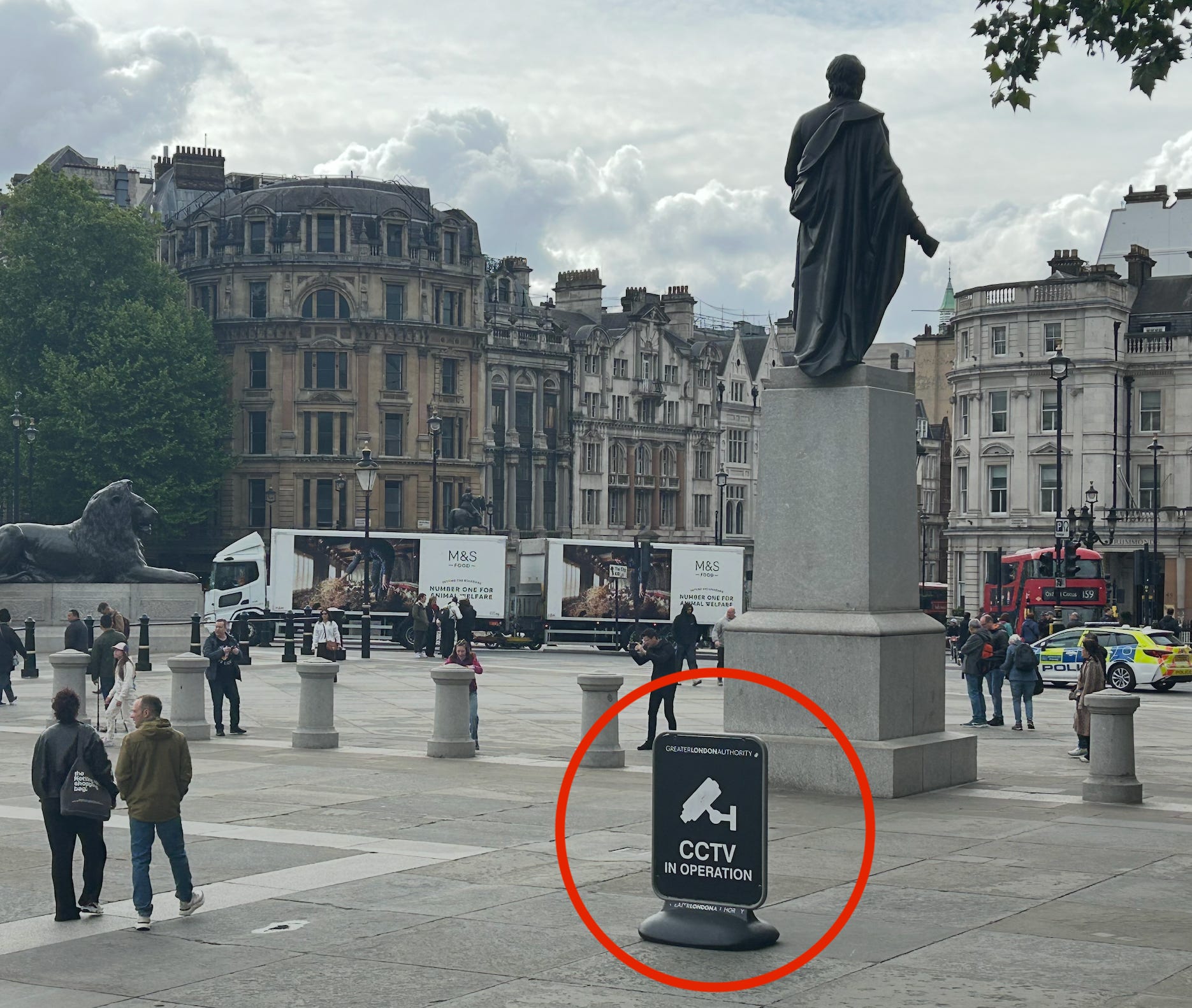
Related: I’m writing this newsletter from London, where CCTV cameras are everywhere, along with signs advertising that they’re filming. While I’d prefer if folks here were less judgmental about my tea preferences, the UK is hardly an authoritarian dystopia.
My op-ed:
Like many Houstonians, I’ve followed recent news stories about violent attacks on this city’s beautiful running trails. Those attacks unnerve me.
As a woman, I’ve wondered why there aren’t cameras along the trails to quickly identify perpetrators when such crimes occur. And as an expert in crime and criminal justice policy, I’ve wondered the same thing.
Economics researchers like myself use randomized controlled trials and “natural experiments” to measure the real-world impacts of policies and programs. Such studies show that surveillance cameras reduce crime in the areas where they are deployed. Careful studies across multiple countries show crime reductions of 20% to 25% in areas with camera systems. The mechanism is straightforward: Cameras increase the probability that criminals get caught. Decades of research confirm that certainty of punishment deters crime far more effectively than severity of punishment. Cameras put this important insight into action.
The sad reality is that most perpetrators get away with their crimes. Across the United States, clearance rates (the likelihood that a reported crime results in an arrest) for violent crimes hover around 50 percent. In Houston, only 28% of reported violent crimes result in an arrest. Most violent crimes — especially those against women — are committed by someone the victim knows, like a boyfriend or husband. Those sorts of crimes are easy to solve, bringing up the average. But random violent attacks like those on Houston’s trails are extremely unlikely to be solved.
We can and must do better. Cameras can help.
Research from Stockholm's subway system found that surveillance cameras reduced crime by approximately 25%, with particularly strong effects on financially motivated crimes like pickpocketing and robbery. A study of police-monitored cameras in Montevideo, Uruguay, documented a 20% reduction in crime with no evidence of displacement — meaning criminals didn't just move to adjacent blocks. Similar results emerge from San Francisco and Medellín, Colombia. Across these very different contexts, cameras had big deterrent effects on crime. Because they were more likely to get caught, many would-be perpetrators simply stopped committing crime.
This makes cameras strikingly cost-effective. One analysis estimated the cost of preventing a single crime through camera surveillance at approximately $2,000. That is a bargain relative to the cost of hiring additional police officers or the massive social costs that crime imposes on communities — not just direct losses to victims, but reduced property values, diminished foot traffic and kids kept home from school.
Critics worry about privacy, and those concerns deserve serious consideration. The real concern is not simply that cameras exist, but how they are used. People worry about function creep, that tools deployed to deter violence today could be used tomorrow to monitor political protests or enforce controversial federal immigration policies. They worry about disproportionate surveillance in minority neighborhoods. They worry about private companies building vast data networks with unclear accountability.
These are not frivolous objections. History offers examples of surveillance powers expanding beyond their original purpose. Indeed, plenty of recent headlines offer such examples as many cities reconsider their contracts for networked cameras and license plate readers.
But we should also consider the alternatives. Unlike harsher sentencing policies that fill up our prisons but have minimal impact on crime, cameras offer deterrence without incarceration. They increase the certainty of consequences — which actually changes behavior — rather than focusing on punishment after the fact. And camera footage is more accurate than eyewitnesses’ memories, helping to avoid wrongful arrests and convictions.
I am confident that we can install tools like cameras in ways that build community trust. We need appropriate safeguards — clear rules about data retention and access, transparency about deployment decisions and oversight mechanisms to prevent abuse. This requires attention, but it isn’t rocket science. Organizations like the Policing Project at New York University already help government agencies design such safeguards.
As a crime expert, I believe this city’s residents deserve a system that delivers reliable, swift consequences for criminal behavior. Tools that help law enforcement solve more crimes, faster — tools like cameras — are a smart way to fight crime and provide justice to victims.
As a Houston resident who now thinks twice about going out for a walk, I implore Mayor Whitmire: Please install cameras along this city’s trails.
My call for crime economists
Second, Anthropic’s new Request For Proposals got me thinking:
Anthropic has launched a new fund for ambitious economics research projects studying AI-related transitions in the labor market, etc.
My hot take: few people have thought more about how to put those on the margins of the labor market on a better path than crime economists.
When people — especially men — aren’t on a “good” path (education, employment), or are feeling insecure about their place in the world, they tend to cause a lot of trouble — for themselves, their families, and their communities. Sometimes this looks like intimate partner violence or sexual assault. Sometimes it looks like burglary or homicide. This is a first-order problem in the US and around the world.
Crime economists certainly think a lot about how to stop crime, using police and prisons. But we also think about what levers we can pull to deter or prevent crime by putting would-be offenders on a better path (before someone’s first arrest, while they’re in the CJ system, and after their release from prison). Does job training help? Mental health care? Summer jobs programs for teens? Cognitive behavioral therapy? GLP-1s to treat addiction?
As an economist, I’m optimistic about all the ways AI will transform our society for the better. Many new jobs will be created. But any transition brings uncertainty and disruption. Many people will lose their jobs as AI tools get better. Many more will feel insecure as we figure out what’s next.
As a crime economist who has followed the literature on how economic shocks affect criminal behavior, I am confident this will lead to more crime. But I’m also confident that our field has the tools to test innovative approaches to minimize the harm - and maximize the benefits - of the transition that is underway.
Fellow crime economists: If you have an ambitious research idea in this vein, I hope you’ll apply for funding. Projects must be $1M or more (ideally over $5M), so they’re not messing around. Bring your biggest ideas. Partner with state and local governments. Let’s go!
Have an idea but need connections (to researchers, practitioners, or policymakers) to help make it a reality? Email me. I’ll try to help.

Full-throated +1 to the Camera Effort On Trails obviously. Now if we can *also* get cameras detecting illegal license plates…