

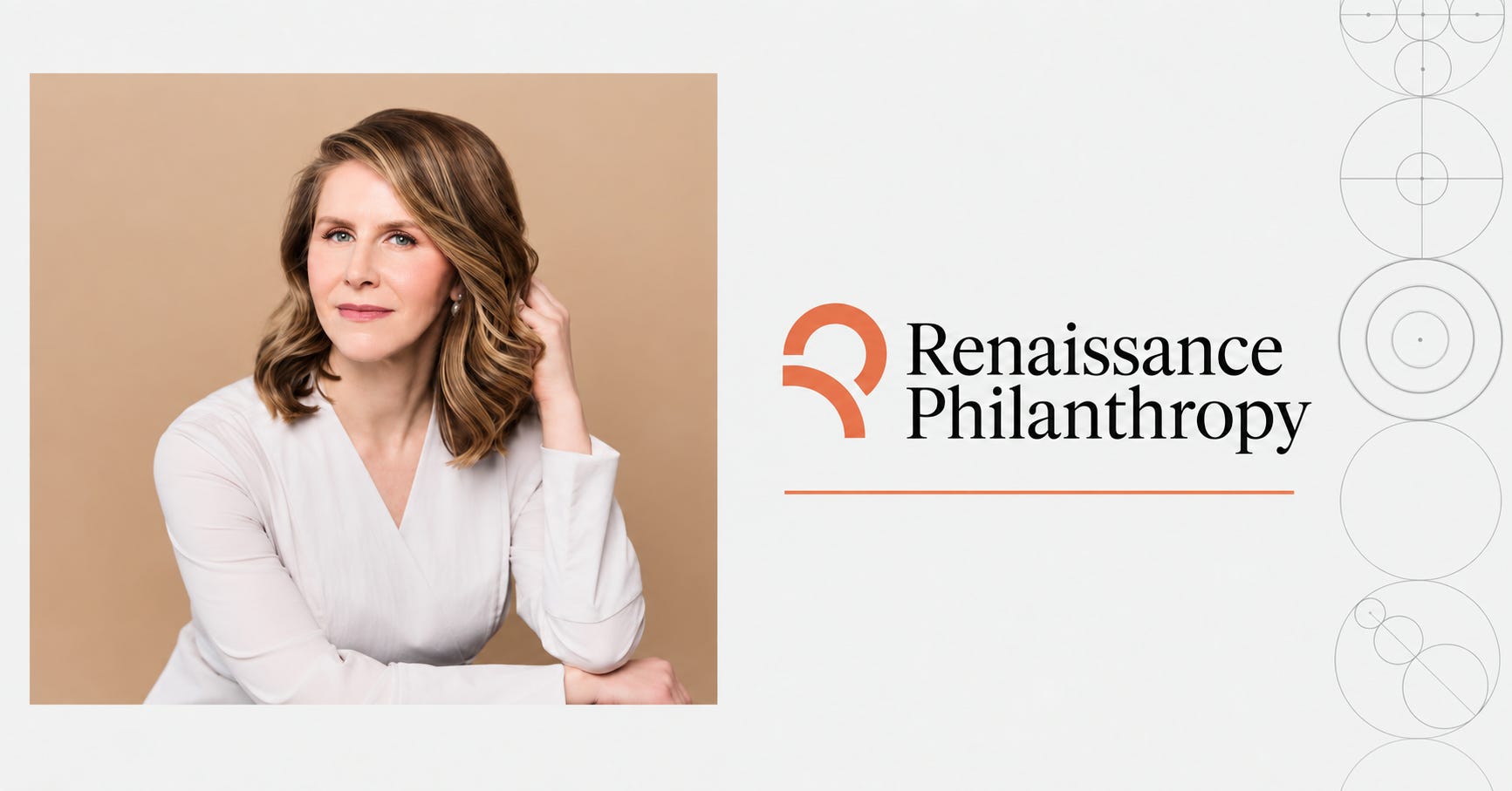
It’s official! I’ve joined Renaissance Philanthropy to build a new fund — the Fund to Fight Crime. It will focus on making targeted, high-impact investments to reduce crime and violence — not just in the US but around the world.
Crime and violence impose massive social costs, in terms of harm to victims, fear within communities, and stymied economic growth. And yet, there is remarkably little philanthropic capital directed to this space. In my view, this is partly because most nonprofits working on criminal justice policy are driven by ideology and moral arguments. This appeals to some funders, but not all, and some are actively turned off by this approach. My hunch is that there are many potential funders out there who are far more interested in the pragmatic question of what actually works to make communities safer and put people on a better path.
I am an economist, well-versed in cost-benefit analyses, market failures, tradeoffs, and externalities. I am passionate about ROI. As an academic for over a decade, I did research to measure the real-world effects of criminal justice policies and programs. I know that most of our good ideas won’t work, and some will even backfire — these thorny social problems are tough to solve. But I also know we have the tools we need to try new approaches and measure whether they work in practice.
The role of philanthropy in this ecosystem is as the seed funder — planting many seeds to find the few that grow into vibrant flowers. This is how the business and tech worlds work. Investors know that most of their investments won’t pay off, but some will pay off big; that’s what success looks like. But the nonprofit and policy worlds have traditionally taken a more cautious and (frankly) naive approach: they plant one seed (chosen based on intuition and good intentions) and then get distracted by other, more pressing problems, never checking back to see if that seed became a flower or a weed or nothing at all.
Looking around, we can all see that this approach hasn’t worked well. Communities still struggle with crime and disorder — a complicated morass of mental illness, addiction, poverty, and poor choices. Local crime rates ebb and flow with national trends but too many stakeholders feel powerless to control them. It’s not surprising that donors don’t want to pour more money into this status quo.
It’s time to change course. Over the past three years, I led the Criminal Justice team at Arnold Ventures, a philanthropy focused on evidence-based policy in the US. There, I created and implemented a bold and (unfortunately) unusual strategy, following data and evidence to figure out what to scale. My team built an R&D engine to find high-impact solutions to public safety problems. We worked across sectors (government, nonprofit, business) to test new ideas and scale the ones that worked. You can read more about this approach here. The punchline is that it was tremendously effective. We spurred innovative research collaborations, piloting new ideas across the country — everything from a detective training school to GLP-1s to treat addiction. And we found policymakers eager for fresh, evidence-based ideas. To do more, faster, they simply need help. The primary constraints on progress are data and relationships — both problems that targeted investments can solve.
Having developed an approach that works in this policy space, I am now ready to scale it. I feel a tremendous sense of urgency to find and scale more solutions that make people’s lives better. I’m looking for funders to join me in this fight against crime. Are you interested, or do you know someone who might be? I’d love to hear from you.
What I’m reading:
Bear Witness: Pursuit of Justice in a Violent Land, by Ross Halperin — a compelling story about the harms of violence and our power to do something about it.
“I changed my mind about Big Philanthropy: The democratic case for billionaire giving” by Dylan Matthews.
“Tomorrow’s AI Won’t Meet Today’s World” by Oliver Hanney, Oliver Kim, and In Development Magazine.
More links:
I recently joined Joshua Steinfeldt on The Courageous Life podcast to talk about my work, my book, and what I’m doing next. Check out the full conversation here (Spotify link) or wherever you get podcasts.


<clasps pom-poms together; executes a high kick>
Congratulations!! FYI - I quoted you today on the crime deterrent effect of ALPRs. If there’s an interest in connecting on this topic or on other crime prevention efforts, we’d love to! https://x.com/gbpolice/status/2099548011407745111?s=46